






Study Shows AI-CVD® Outperforms Diabetes in Predicting Heart Failure Risk
HOUSTON, TX, May 18, 2026 - HeartLung Corporation announced the publication of a new study in the American Journal of Preventive Cardiology titled “Comparing Incidence of Heart Failure in Individuals with Enlarged Cardiac Chambers versus Diabetes.” The study demonstrates that HeartLung’s AI-CVD AutoChamber module can opportunistically identify left atrial enlargement, left ventricular enlargement, and increased left ventricular mass from routine coronary artery calcium scans, and that these AI-derived findings are independently associated with incident heart failure.
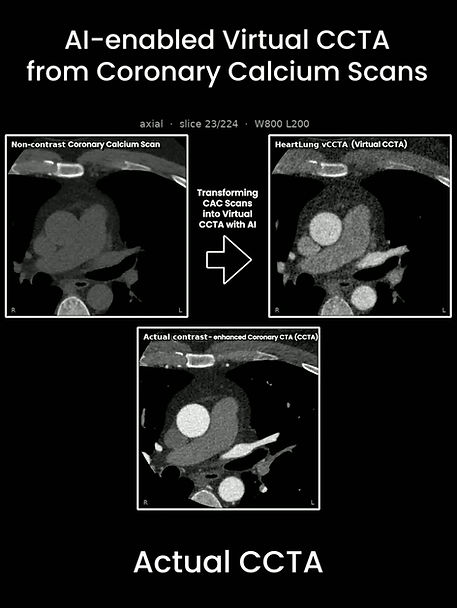
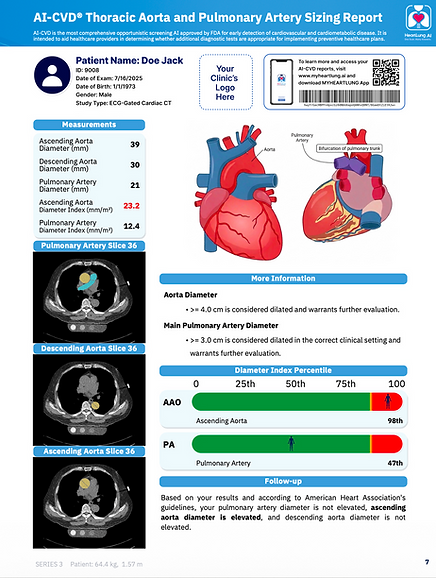
AutoChamber, which has received FDA Breakthrough Device Designation, is the specific AI-CVD module used for automated cardiac chamber volumetry. AutoChamber is part of HeartLung’s AI-CVD package, a multi-component AI platform designed to extract broader cardiovascular and multisystem risk information from routine non-contrast CT scans. By analyzing the same scan traditionally used to measure coronary artery calcium, AutoChamber enables assessment of structural cardiac remodeling without requiring an additional imaging exam, contrast, or added scan time.
The study analyzed AI-derived left atrial volume, left ventricular volume, and left ventricular mass from non-contrast coronary artery calcium scans in 7,585 asymptomatic participants from the pooled Multi-Ethnic Study of Atherosclerosis and Framingham Heart Study cohorts. Over a median follow-up of 17.1 years, there were 438 incident heart failure events.

A key finding was that individuals without type 2 diabetes but with AI-detected cardiac chamber enlargement had heart failure incidence rates comparable to, and in some cases higher than, individuals with type 2 diabetes who had normal chamber sizes. This is clinically significant because diabetes is already recognized as a major heart failure risk factor and is classified as Stage A heart failure in current prevention frameworks. However, individuals without diabetes are not routinely targeted for the same heart failure screening pathways, even when they may have hidden structural cardiac remodeling.
In the study, individuals without diabetes and with left atrial volume at or above the 95th percentile had a heart failure incidence rate of 16.4 per 1,000 person-years, compared with 8.7 per 1,000 person-years among individuals with diabetes but normal left atrial volume. Similarly, individuals without diabetes and with increased left ventricular mass at or above the 95th percentile had a heart failure incidence rate of 10.1 per 1,000 person-years, compared with 8.9 per 1,000 person-years among individuals with diabetes and normal left ventricular mass.
After multivariable adjustment, enlarged left atrial volume, left ventricular volume, and left ventricular mass remained independently associated with incident heart failure in individuals without diabetes, even after accounting for conventional risk factors, coronary calcium burden, PREVENT risk score components, and NT-proBNP.
“This study highlights an important blind spot in current heart failure prevention,” said Oren Mechanic, MD, MPH, of The Agatston Center. “Diabetes is well recognized as a major risk factor, but this research shows that AI-detected structural cardiac enlargement can identify patients without diabetes who may have comparable or even greater future heart failure risk. The ability to detect that risk from a calcium scan that is already being performed makes AutoChamber a powerful tool for earlier identification and more targeted prevention.”
The study also found that individuals with both diabetes and AI-detected structural cardiac enlargement had the highest heart failure rates, suggesting that AutoChamber may help identify a particularly high-risk subgroup that could benefit from more intensive prevention strategies.
Arthur Agatston, MD, FACC, inventor of the coronary artery calcium score and a global leader in cardiovascular preventive medicine, said the findings represent the next evolution of calcium scoring and preventive cardiovascular imaging. Dr. Agatston and The Agatston Center have been early adopters of HeartLung’s AI-CVD package, including AutoChamber, as part of a broader effort to advance AI-enhanced preventive medicine.
“The calcium score changed preventive cardiology because it allowed us to detect coronary disease before symptoms appeared,” said Dr. Agatston. “HeartLung’s AI-CVD platform builds on that foundation. As an early adopter of this technology, I believe AI-CVD represents the future of preventive imaging by using one low-radiation CT scan to uncover not only coronary calcium, but also hidden structural signs of future heart failure risk. This is exactly where preventive cardiology needs to go.”
The Agatston Center for Preventive Medicine is based in Miami Beach, Florida, and focuses on advanced cardiovascular prevention, personalized risk assessment, and AI-enhanced imaging. More information is available at https://www.theagatstoncenter.com/.
By enabling assessment of structural cardiac remodeling alongside coronary artery calcium burden, AutoChamber expands the clinical utility of calcium scoring beyond traditional coronary artery disease risk stratification. The study supports the potential use of AI-derived cardiac chamber volumetry to help identify patients at elevated risk for heart failure earlier, including individuals without diabetes who may otherwise remain outside current guideline-recommended screening pathways.
The authors note that additional studies are needed to establish CT-based reference thresholds, evaluate integration of AI-derived chamber volumetry into existing heart failure risk prediction models, and determine whether early intervention in asymptomatic individuals with chamber enlargement can prevent or delay progression to symptomatic heart failure.
About HeartLung Technologies
HeartLung Technologies is a pioneer in AI–driven preventive imaging, focused on early detection of cardiovascular disease, lung cancer, COPD, osteoporosis, fatty liver disease, and other conditions detectable on CT scans. Its flagship platform, AI–CVD, transforms routine CT imaging into a scalable platform for comprehensive cardiovascular risk assessment and prevention.


Comments