






HeartLung Founder Dr. Morteza Naghavi Leads Authors in JACC Viewpoint Urging CMS Coverage for Coronary Calcium Imaging
Houston, TX — December 2025 — HeartLung announced today the publication of a landmark Editorial Viewpoint in JACC: Cardiovascular Imaging, led by Morteza Naghavi, MD, founder of HeartLung, urging the Centers for Medicare & Medicaid Services (CMS) to recognize coronary artery calcium (CAC) imaging as a diagnostic test and initiate national coverage.
The Viewpoint, “Coronary Artery Calcium (CAC) Imaging as a Diagnostic Test: Insurance Coverage Implications,” represents the culmination of more than six years of scientific, clinical, and policy engagement and brings together an unprecedented group of leading cardiologists, imagers, and public health experts. The authors argue that CAC imaging directly diagnoses coronary atherosclerosis—often long before symptoms occur—and that its continued misclassification as a “screening” test has become a major barrier to equitable, guideline-based care.

“Millions of asymptomatic individuals have advanced, silent coronary atherosclerosis,” said Dr. Naghavi, lead author of the Viewpoint. “Many have very high CAC scores but are denied access because of outdated coverage policy. Too often, the first clinical presentation is a heart attack. This paper lays out why CAC imaging is a diagnostic test—and why CMS coverage is essential to saving lives.”
Importantly, the publication has already met the evidentiary milestone explicitly requested by CMS, triggering a formal request for initiation of a National Coverage Determination (NCD) for diagnostic CAC imaging.
David Yankelevitz, Professor of Radiology at the Icahn School of Medicine at Mount Sinai and a pioneer of CT-based lung cancer screening, underscored the significance of the effort:
“Having been directly involved in the approval process for lung cancer screening, I know firsthand how challenging this can be,” said Dr. Yankelevitz. “What is different here is the extraordinary breadth and credibility of the group now signing on. This should send an irresistible message to CMS that the evidence is mature, the clinical need is clear, and the time to act is now.”
The Viewpoint highlights that:
CAC imaging directly detects and quantifies coronary artery disease, rather than inferring risk from demographic or laboratory surrogates.
ACC/AHA and multisociety prevention guidelines already recommend CAC imaging to guide treatment decisions.
Diagnostic CAC imaging follows the same paradigm as other CMS-covered tests, such as ambulatory blood pressure monitoring and prostate MRI after PSA screening.
Continued lack of coverage disproportionately harms Medicare beneficiaries and lower-income patients, perpetuating a two-tiered system of preventive care.

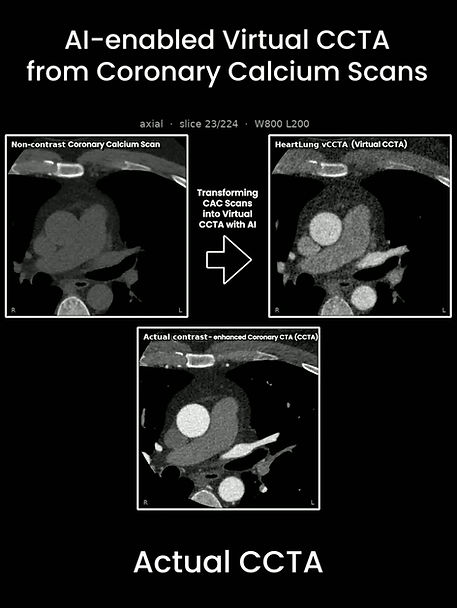
As founder of HeartLung, Dr. Naghavi has long championed opportunistic CT-based detection of hidden cardiovascular disease as a path toward population-scale prevention. The JACC Viewpoint translates decades of accumulated evidence into a clear policy framework aimed at preventing millions of avoidable heart attacks and deaths.
“This is not about adding another test,” Dr. Naghavi added. “It is about correcting a policy failure that blocks access to one of the most powerful diagnostic tools in preventive cardiology.”

About HeartLung.AI
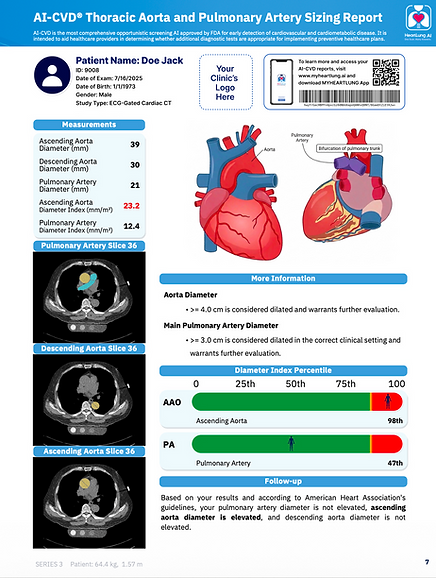
HeartLung.AI is a health-tech company aiming to bring AI-enabled early detection and prevention of cardiovascular disease and lung cancer to mass adoption. Additionally, AI helps physicians to opportunistically detect osteoporosis, fatty liver disease, and other cardiometabolic abnormalities such as myosteatosis. HeartLung Technologies Received FDA “Breakthrough” Designation and Marketing Authorization for AutoChamber™: The first AI that enables opportunistic detection of hidden heart disease in millions of chest CT scans. HeartLung cleared FDA 510(k) for AutoBMD which is the only DEXA-equivalent, CT-based opportunistic osteoporosis screening applicable to 25+ million CT scans of the chest and abdomen every year. HeartLung Technologies is positioned to lead the future of AI-enabled preventive imaging to fight the number 1 and 2 causes of death namely cardiovascular disease, and lung cancer. HeartLung’s innovations, including AI-CVD™, AI-CAC™, AutoChamber™, and AutoBMD™, are designed to empower hospitals and imaging centers with precision prevention technology at population scale.


Comments