






HeartLung AI Highlights World-Renowned Scientific Advisors and New Scholarly Contribution on Heart Attack Care
Houston, TX — HeartLung AI today recognized its scientific advisors, including Robert A. Kloner, MD, PhD; Arthur Agatston, MD, FACC; Claudia Henschke, MD, PhD; and David Yankelevitz, MD, as internationally recognized pioneers whose work has helped shape modern cardiovascular prevention and lung cancer screening.
As part of this leadership, HeartLung AI is highlighting a recent publication by Dr. Robert A. Kloner and colleague featured in a companion volume to Braunwald’s Heart Disease—widely regarded as the “bible of cardiology”:
Chapter 19: “Reperfusion Injury: Prevention and Management.”In Acute Coronary Syndromes (Second Edition): A Companion to Braunwald’s Heart Disease (Ed. D. Morrow). Elsevier, Philadelphia. 2026; pp. 253–263.
This chapter provides a concise, clinically oriented review of reperfusion injury—the tissue damage that can occur when blood flow is restored after a coronary artery blockage is opened during treatment of a heart attack. It summarizes the major clinical manifestations (including transient contractile dysfunction, reperfusion-related rhythm disturbances, and microvascular obstruction) and outlines practical approaches under investigation to prevent and manage these complications, spanning procedural strategies and adjunctive therapies, while emphasizing the importance of translating mechanistic insights into consistent real-world clinical benefit.

HeartLung AI’s advisory team reflects the company’s commitment to evidence-based innovation in preventive imaging:
Arthur Agatston, MD, FACC — inventor of the Agatston Calcium Score
Claudia Henschke, MD, PhD and David Yankelevitz, MD — pioneers in lung cancer screening and cofounders of I-ELCAP
Robert A. Kloner, MD, PhD — cardiovascular research leader with decades of contributions to the understanding and treatment of heart disease
“HeartLung AI is proud to work alongside physicians and scientists whose research has shaped preventive medicine and directly influenced clinical practice,” said Dr. Morteza Naghavi, founder and President of HeartLung AI. “Their leadership strengthens our mission to help detect preventable, life-threatening disease earlier, when intervention can change outcomes.”
HeartLung AI’s broader platform work in opportunistic CT-based screening is designed to translate this caliber of science into scalable clinical impact.
About HeartLung AI
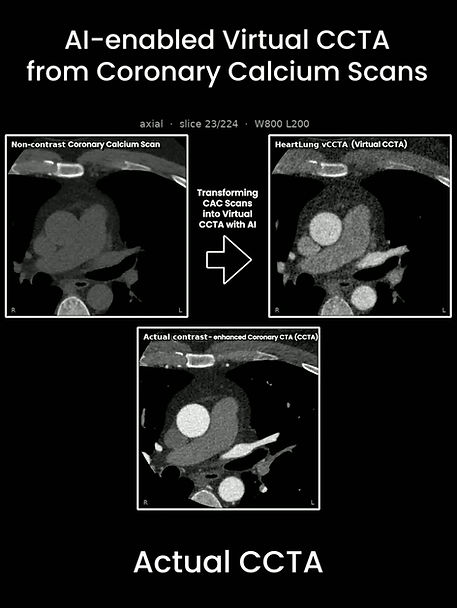
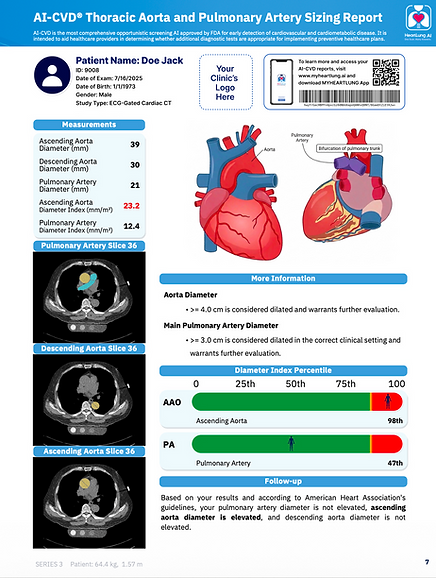
HeartLung.AI is a health-tech company aiming to bring AI-enabled early detection and prevention of cardiovascular disease and lung cancer to mass adoption. Additionally, AI helps physicians to opportunistically detect osteoporosis, fatty liver disease, and other cardiometabolic abnormalities such as myosteatosis. HeartLung Technologies Received FDA “Breakthrough” Designation and Marketing Authorization for AutoChamber™: The first AI that enables opportunistic detection of hidden heart disease in millions of chest CT scans. HeartLung cleared FDA 510(k) for AutoBMD which is the only DEXA-equivalent, CT-based opportunistic osteoporosis screening applicable to 25+ million CT scans of the chest and abdomen every year. HeartLung is awaiting approval for AI-CVD® which includes multiple AI modules including AutoCAC™ (Automated Coronary Artery Calcium Scoring based on the legacy Agatston score) and AI-CAC ™ the new calcium scoring technique powered by AI, also referred to as “Agatston 2.0”. HeartLung is initially focused on opportunistic screening in chest CT scans as the lowest hanging fruit for preventive care. To use HeartLung.AI services no hardware or software installation is required—simply sign up within 5 minutes at www.provider.heartlung.ai and connect your PACS to HeartLung.AI cloud and receive AI-generated DICOMized PDF reports sent directly back to your PACS.
This seamless integration allows for immediate use without changing existing workflow. Additionally, referring physicians manually upload CT scans and receive instant AI-generated reports. Similar AI-CVD® will empower hospitals and diagnostic imaging centers to provide their patients with fast, actionable data for multiple diseases all from a single chest CT scan.
HeartLung Technologies is positioned to lead the future of AI-enabled preventive imaging to fight the number 1 and 2 causes of death namely cardiovascular disease, and lung cancer. HeartLung’s innovations, including AI-CVD®, AI-CAC™, AutoChamber™, and AutoBMD™, are designed to empower hospitals and imaging centers with precision prevention technology at population scale.


Comments