






AI-enabled opportunistic measurement of liver steatosis in coronary artery calcium scans predicts cardiovascular events and all-cause mortality:
An AI-CVD study within the Multi-Ethnic Study of Atherosclerosis (MESA)
Naghavi M, Atlas K, Reeves A, Zhang C, Wasserthal J, Atlas T, Henschke CI, Yankelevitz DF, Zulueta JJ, Budoff MJ, Branch AD, Ma N, Yip R, Fan W, Roy SK, Nasir K, Molloi S, Fayad Z, McConnell MV, Kakadiaris I, Maron DJ, Narula J, Williams K, Shah PK, Abela G, Vliegenthart R, Levy D, Wong ND. AI-enabled opportunistic measurement of liver steatosis in coronary artery calcium scans predicts cardiovascular events and all-cause mortality: an AI-CVD study within the Multi-Ethnic Study of Atherosclerosis (MESA). BMJ Open Diabetes Res Care. 2025 Apr 12;13(2):e004760. doi: 10.1136/bmjdrc-2024-004760. PMID: 40221147; PMCID: PMC11997824. EINPresswire.com. View Press Release.
HeartLung Technologies is proud to announce the publication of its latest AI-CVD™ research in BMJ Open Diabetes Research & Care, highlighting the transformative potential of artificial intelligence (AI) in cardiovascular disease (CVD) risk prediction of heart disease risk and all-cause mortality. This peer-reviewed article addresses the critical need for more accurate and individualized CVD risk assessment in diabetic populations, who face a significantly elevated risk of cardiovascular complications compared to the general public.
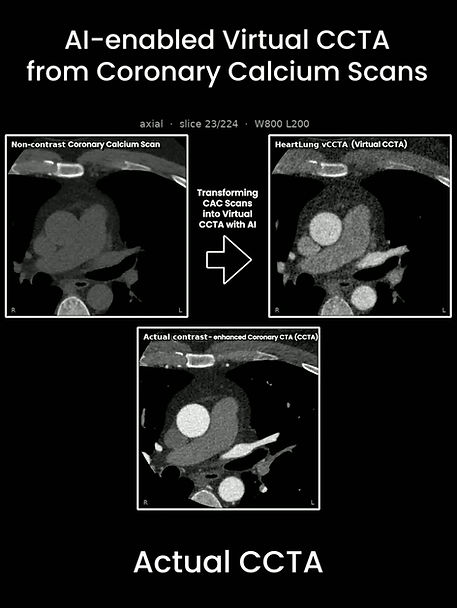
Early disease detection is a prerequisite for primary prevention. Coronary Artery Calcium (CAC) scan, with opportunistic extraction of actionable information (using existing guidelines and care pathways), is a promising approach for early detection of multiple conditions including coronary heart disease (CHD), heart failure, atrial fibrillation, stroke, osteoporosis, steatosis, and other abnormalities that often interplay and contribute to poor outcomes. Additionally, the same technique can be applied to both abdominal and non-gated lung cancer screening scans, potentially reaching a larger population who may not be actively seeking CVD risk assessment. Our AI-CVD™ approach can best serve primary care doctors because MRI and ultrasound imaging of liver fat are unavailable for primary care settings and cannot be performed as an add-on opportunistically. In contrast, our AI software is readily accessible in such settings, providing a significant advantage from a public health perspective.
For example, the AI-CVD™ software can function as an opportunistic screening tool within the background of radiology PACS, flagging high-risk individuals for follow-up, many of whom might not have previously undergone cardiovascular risk factor assessment.
Others have reported similar opportunistic measurements in CT scans. With the expansion of AI-enabled early detection, it is imperative for professional societies from diverse disciplines—such as cardiology, pulmonology, endocrinology, gastroenterology/hepatology and lung cancer—to collaborate in developing guidelines for implementing opportunistic disease assessments to improve patient care. In this context, one can anticipate future ‘incidental’ findings to become ‘intentional’ findings.
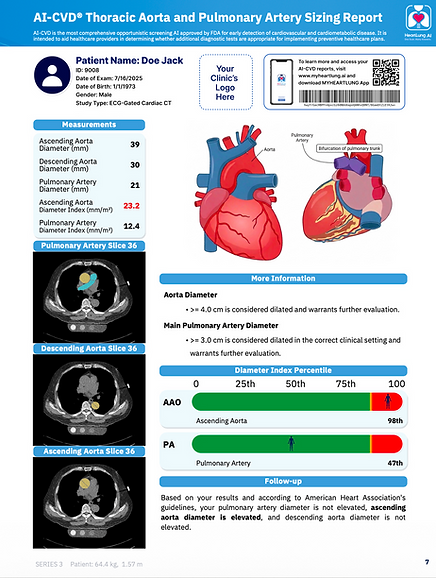
HeartLung.AI’s AI-CVD™ platform exemplifies the practical application of these research findings. AI-CVD™ harnesses proprietary machine learning algorithms to analyze a comprehensive set of patient data from CT scans, as well as medical history, laboratory values, and other risk factors, to deliver individualized CVD risk assessments.
"AI-CVD™ opportunistic fatty liver screening best serves primary care doctors because MRI & ultrasound imaging of liver fat are unavailable in primary care clinics and cannot be done opportunistically." - Dr. Morteza Naghavi, MD, founder of HeartLung Technologies and nonprofit SHAPE (Society for Heart Attack Prevention and Eradication).
Unlike previous studies, the AI-CVD™ platform analyzes the entire liver visible in calcium scans, providing a more comprehensive assessment.
By integrating AI-CVD™ into clinical workflows, healthcare professionals can proactively identify high-risk diabetic patients and implement personalized prevention or intervention strategies. The platform’s rapid, automated analysis—capable of generating quantitative imaging reports in seconds—enables timely and actionable insights for clinicians. With its ability to continuously learn from new data and its compatibility with EHR systems, AI-CVD™ is positioned to play a pivotal role in reducing cardiovascular complications and improving long-term outcomes for people with diabetes.


Comments